For this podcast, we get a second week of undiluted Darren and Nico without guests to undilute them. I quite enjoy them on their own but suspect that it would wear in time.
Here’s the introduction from Darren to this week’s podcast
In this episode Nico Aspinall and I reflect on a busy few days at the Pensions UK Annual Conference in Liverpool.
From ministerial speeches to some lively debates on and off stage, there’s plenty to get our teeth into.
We cover:
🏛️ Politics and pensions: what did Torsten Bell and Helen Whately have to say?
⚖️ Value for money: could the new framework drive herding, stifle innovation and create more problems than it solves?
📏 Scale and consolidation: do we really need a scale test if we’ve got a functioning VFM framework?
💷 Pensions adequacy: is the industry ready to tackle the big questions on contributions, tax and retirement outcomes?
🔎 Pensions dashboards: Darren gets his hands on a live dashboard. But where’s his Civil Service pension?We also reflect on the Beyond the Bottom Line fringe event hosted by Untamed Consulting and Moore Squared Communications, question whether there’s enough genuine debate at industry conferences, and wonder whether the pensions industry needs to get better at speaking truth to power.
And, as Nico asks, why don’t things just work? 🤷♂️
The boys are now a regular hosts of the conference fringe though I should remind them that they did not invent it!
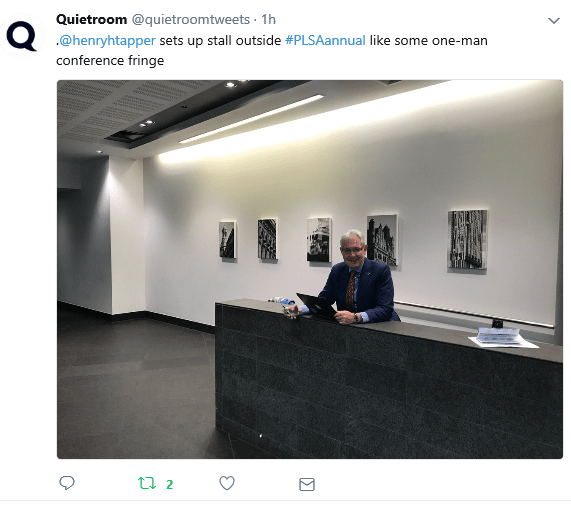
Fringe event at Liverpool
Here’s this week’s podcast sitting beside nearly 200 others.
I can sympathise with the lads for their frustration at the lack of debate. The Conference has seldom been a place for confrontation, when it is – it is the better for it – take the debate between Will Hutton and Jo Cumbo.
The VFM duo are not unique in having contrarian views but most who do found themselves elsewhere than #PensionsUKAC26.
Darren has included himself this year by paying a reduced fee for his micro-firm to be a member and a similar fee to have been a delegate. Nico got in under his much larger employer’s payment. We wonder whether they considered this VFM – my guess is that it was – if only for the liquid nourishment.
What both make clear on this pod is that the majority of sessions are sponsored and are advertisements while the plenary events no longer have space for live questions – drawing from those submitted via Slido or whatever.
The result is very little real debate which is what Darren, his firm and 100 others are fostering by having a fringe. All of this is very good though I suspect that listeners may find the advertisement for the activities for the VFM two – a little long.
The second half of this podcast is a lot better for sticking to the agenda laid out above. Nico is particularly good on the merits of Helen Whately and Torsten Bell – using a VFM scale Helen scores well below average while Torsten scores 9 for doing “the pensions commission’s job”.
It is a noble business carrying this podcast on and I applaud them for it. It is not universally listened to nor are the lads as popular with the public as Tom McPhail. Tom is doing a reasonable job of being shadow pensions minister (Helen Whately being shadow SOS of DWP). If I was looking for good odds, it might be seeing Tom in parliament before too long .
If the lads wanted to get some controversy on their podcast they could do worse than get Tom McPhail on!


The economic background is challenging and guidance can be found in the recent report
The RF report’s key findings are:
The RF’s recommendations are:
The RF solution is to introduce steady quarterly increases in duty to recoup Rishi Sunak’s 2022 5p a litre discount and then grow the duty rate by about 0.75% a quarter. Call it the boiling frog approach – fuel price volatility is such that the small quarterly increase (about 0.5p a litre) would go unnoticed.
The RF approach is probably close to what Andy Burnham would like to happen, but the mood music at present seems to point to as little as possible being touched ahead of next year’s Spending Review.