Good enough for a financier – good enough for a bus driver?

I am very interested by this article – coming from M&G and talking of Aberdeen’s recent take on of the Stagecoach £1.25bn Pension Scheme

There is an interesting commentary on an asset manager that until recently was involved with an insurer (Aberdeen and Standard Life) by an insurer who we think of as an asset manager (M&G which was Prudential).

The M&G approach to a deal with pension trustees and members to adopt a with-profits approach and consequently is as close as an insurance company will get to the “run-on” deal of Aberdeen’s. I am so pleased that M&G is so complimentary of the Aberdeen approach. I fear there aren’t enough Aberdeen’s to go around nor such bold Trustees as those of Stagecoach.

Of course the deal only is only for staff who joined the Stagecoach DB scheme. There will be staff of that company who have no defined benefits from being in what is now the Aberdeen sponsored plan. I hope that Stagecoach will find a way to improve the rights of those in a DC plan. There are two ways of doing this, the first is increasing contributions and the second is moving to CDC. It will be interesting to see whether and if so how the mutuality between Aberdeen and Stagecoach will extend  benefits to the two company’s current workforces.

Aberdeen is also currently operating DC benefits and announced in April that it would improve the contributions to its DC scheme for today’s staff.

The group’s annual results revealed that it reached an agreement with the trustee of its main DB pension plan to unlock the plan’s surplus for the benefit of both the company and DB plan members.

The agreement, which is one of the largest of its kind, is designed to enable Aberdeen’s DC contributions to be funded from the DB surplus, while largely maintaining the surplus and maintaining future optionality, such as an insurance buyout.

The group confirmed that DB members will benefit from enhanced pension entitlements and guardrails to ensure the continuing financial strength of the plan.

Aberdeen also said earlier in the year that the deal with staff also includes a modest increase to the target level of investment return, which is intended to “open up” the possibility for a broader range of investments, including private as well as public market assets.

In an article by Sophie Smith of Pension Age,  Aberdeen said that

the agreement was made possible due to the plan’s strong long-term investment performance, delivered by Abrdn (Aberdeen) Investments’ pension solutions and liability aware investment teams.

Let us hope that bus drivers get the same treatment whether in the DB scheme or in a DC  plan or both!


Posted in pensions | Leave a comment

Ros Altmann in 2020 on the Pension Action Group’s progress to that date

It has been over 5 years since I published this blog on the Pensions Action Group.  My blog is not worth a great deal of time and I enjoy it  for a picture I took on the stripper’s beach in Studland Dorset. It was taken to remind us of the Brighton antics of many years before but there were no nudists willing to be photographed! 

More importantly was what followed from Baroness Ros Altmann.

Clearly not a nudist day

I re-read it again today and while my blog falls away , the “comment” remains a statement of how pensions were and how they’ve come on this decade.


Here is Ros Altmann’s “comment” – it is a blog of some merit

Baroness Ros Altmann

I have resisted commenting so far, but feel that, having been at the helm of the ‘Stripped of our Pensions’ campaign to get Government to compensate people who lost their entire pension after a lifetime of contributions and successive official assurances that their pensions were ‘safe and protected by law’, I think it is important to recognise that the PPF has done a tremendous job in protecting DB scheme members.

I will never in my life come up with a better slogan for a campaign than our ‘Stripped of our Pensions’ banner, which was fun to choreograph, but it was utterly accurate.

These workers, all of them lifelong loyal employees of their firms and many had their whole life savings in their company scheme (in those days, if you had a company pension, then Government rules required you to put all your additional personal pension savings in there as well) were facing financial ruin. Even part of their state pension was in their company pension scheme.

So, after Maxwell, workers who had been assured that their pensions could not disappear in future because protection had been put in place, realised they had not been told the truth.

The actuarial assumptions behind the so-called ‘Minimum Funding Requirement’ (MFR) (which became the ‘Maximum’ Funding Requirement for most schemes) were only actually designed to give a 50/50 chance for members to get their full pensions. But members were told their money was safe and protected by law.

What went so wrong?

Firstly, the MFR actuarial calculation was designed to deliver only the 50% chance of full pension. This made it far too weak as a standard for pensions that were supposed to be ‘guaranteed’.

Secondly, even employers who were solvent were allowed to walk away from their pension liabilities as long as they had met this MFR standard – which saw many firms in the early 2000’s abandon their pension schemes by paying just MFR, but this was so inadequate to cover the costs of winding up the scheme itself, that even those workers in schemes where the employer had not gone bust, found they had lost their pensions too.

Thirdly, the MFR did not protect workers whose companies were subject to corporate and private equity ‘restructuring’. I saw private equity firms bought up traditional manufacturing companies which had long-standing DB schemes, then split that company into different parts – one new company was given the good assets that the new owners wanted to keep and the liabilities or unwanted assets were left in the old firm.

That firm then failed and the new owners walked away with profitable assets in the new split off company, while the pension scheme was left attached to the but firm.

This was morally horrendous, but perfectly legal at the time. Indeed, this is what led to the ‘full buyout’ requirements that were put into legislation for Section 75 debt – previously, this could be met by just MFR. The aim was to deter this kind of corporate restructuring.

Fourth, the Trade Unions recognised the problems for their members and turned to the EU Insolvency Directive to challenge the UK Government on the lack of protection for workers whose companies had failed without enough money to pay the full pensions. EU law required pensions to be protected on insolvency, but the UK system failed to do this properly.

Fifth, the problem was compounded by several Government decisions. These included the withdrawal in 1997 of ACT relief for company dividends, that meant pension schemes lost 20% of their dividend income overnight. No offsetting provision was made for this in the actuarial calculations. Government also decided to tax pension fund ‘surpluses’ in the late 1980s, which led trustees and companies to try not to have such ‘surpluses’.

Actuarial assumptions suggested the schemes had so much extra money that they could afford to increase benefits, while employers did not need to pay a penny into the schemes.

Once again, these assumptions proved incorrect, because market moves meant the risk of sudden falls or tax and legislative changes had not been provided for in the asset allocation., The normal actuarial risk margins were missing it seemed and when the dot-com crash came, pension schemes were badly hit.

BUT in my view, the biggest problem was the legal ‘priority order’ on wind-up and the requirement in legislation to buy annuities to secure pensioner benefits in full (including all inflation-linking) before non-pensioner members (even those a day away from their pension) could get any money at all.

This was the most iniquitous part and it was the combination of the pensioner cut-off (which still allowed directors to walk away from age 50 taking ‘early retirement’ and getting the scheme assets to buy annuities for them, but leaving loyal long-serving workers with no pension at all) plus the cost of deferred and index-linked annuities.

This priority order meant that even non-pensioners’ state pension contracted out rights were not covered on wind-up.

I believe that there should have been risk margins built in to actuarial forecasts and there should have been much more recognition of risk. The priority order should also have recognised the rights of long-serving members, rather than using stark ‘pensioner’ cut-off to refer even to early retirees and Directors.

This is why the PPF rules contained the reduction for early retirement! The PPF now ensures that workers’ pensions are protected and they can no longer lose their whole life savings and their company pension if their employer fails.

That is tremendous progress but the campaign was hard-fought. The Financial Assistance Scheme was resisted by Gordon Brown for years, the workers in schemes whose employers had not become insolvent were not protected by EU Insolvency protection at all, so the Trade Unions were battling for insolvency but the Pensions Action Group which I spearheaded had to battle for the solvent employer schemes too.

Andrew Young was instrumental in helping to get the Financial Assistance Scheme recognised and in stopping the winding up schemes from buying annuities. I had called for that in 2003, but nobody would listen. Running the schemes on, rather than locking into annuities, allowed the assets to be used to help defray the short-term funding costs that the Treasury would need to pick up. Andy was brilliant, he understood the need to remedy this injustice and Sara, his now wife, has done a splendid job at the PPF.

This whole episode (when I had to watch people die without their pensions, a wife who felt she had to lie to her husband on his death bed about having won our pensions battle so her husband could die in peace), people having to complain to Parliamentary Ombudsman after being fobbed off by Ministers, then seeing the Government totally reject the Ombudsman’s recommendation for full compensation, then having to mount a case in the High Court where I had to find lawyers to work on a no-win, no-fee basis to sue the Government for maladministration, then having to fund an Appeal Court case when the Government refused to accept the High Court ruling in favour of the Pension Action Group victims,

Moral of the story

Moral of the story (I could write a book, but time does not permit and there is much more to this that needs to be learned) would be

1. there are no guarantees in pensions and people need to recognise there are risks which may reduce the amount received

2. pension ‘surpluses’ were really buffers against bad markets and actuarial assumptions need to make provision for both risk and upside returns (we’ve gone from over emphasis on taking risks in order to maximise returns,, to an over emphasis on minimising risks (which means must lower returns) – both are wrong and I believe the aim should be to “manage’ risks.

In a QE world, increasingly buying bonds and gilts will not deliver the returns needed to pay pensions in the long run. A diversified portfolio of asset classes which deliver different types of risk premia rather than relying on any one asset class too much will diversify risk and sources of return.    (note this was written in 2020)

Finally, the cost of Section 75 buyout and annuitisation is ruinous and wasteful of corporate resources. Use pension assets to invest in growth-producing investments, in social housing, build to rent, old-age living, infrastructure and so on. And that means look to the consolidators to drive the future of pensions – economies of scale, investing for the long-term,ongoing funding rather than annuity purchases….

Posted in pensions | Tagged , , , , , , | 4 Comments

Great Britain – How We Get Our Future Back.

In a video from his speech on the Pension Schemes Bill, Duncan-Jordan urged using pooled pension funds for social housing, green technology, and divestment from fossil fuels and firms linked to human rights abuses. His Progressive Pensions campaign seeks amendments to align investments with workers’ values and ensure a liveable environment in retirement. Critics called it theft of private pots and argued trustees must prioritize returns over public projects, highlighting tensions over the trillions in household wealth. The amendments were debated but not voted on separately as the bill advances. – Grok

Here is the video , see what you think.

Duncan-Jordan is that rarity , a Labour parliamentarian from Dorset. I have written to him with my support. My father was the first non Conservative to lead Dorset County Council and stood for North Dorset as a prospective MP. I know he would share with me, pride that Neil comes from Poole.

Not a consensus by any means

Many of my friends such as Jo Cumbo have spoken out against this tweet on social media and I am sure that the majority of the pensions industry does not want Government intervening in how our money is invested. As if Government does not intervene in how our wages are spent (taxation) our gains are spent (taxation) and inheritances are taxed (taxation).

We in pensions think that we have a fiduciary duty which lifts us above the normal rules of Government. The rules are that governance from Government is executed through taxation and the legislation of our key institutions – our pension system being one of them. How arrogant is it of us to commit the investment of the trillions of money invested in guaranteed pensions and un-guaranteed pots solely to a handful of trustees?


Calling on the voices for progress

We need to galvanise the voice of the many voices that speak for ordinary people and care for the clean growth of Britain. From the centre – what was the SDP and Liberal voice and is now represented by Will Hutton , through the progressive Labour party of Torsten Bell to the left of Labour which I take to be Neil Jordan and the voice of the unions. This is the voice of John Hamilton at Stagecoach, calling for long-term growth from our pensions and from the Lords are the voices of Jeannie Drake, Sharon Bowles, Ros Altmann and Bryn Davies.

It is not good enough to stand by and let pensions be run by the City through Wall Street to California, we cannot give control of our pensions to theorists who argue for global diversification that leaves no money for Britain. We must invest in the clean growth of our country if we are to have Britain Great again.

The book by the Pensions Minister that I follow

The purists in pensions do not represent the people who they serve. Whether from the left or right or centre, the consensus view of those who rely on our pensions, rather than those who manage them. is that they need to have money managed  to get their future back.

Posted in pensions | Tagged , | Leave a comment

Britain needs LGPS’ Pools of excellence to turn pots to pensions!

Steve Simkins

Steve Simkins is a smart actuary who works for Isio but thinks for us all and in this post he asks some questions that I have been asking in my head and asked at a recent Conference mainly delegated by LGPS officials. Steve asks if the pools of the LGPS collectively could be considered a sovereign wealth fund.

My question is whether pools of money larger than £100bn might not offer services to young CDC schemes. looking to be that size by the middle of the century.

That LGPS is overfunded is plain to see. Steve points out that the Government Actuary Department will need to oversee a valuation in England and Wales that must justify more contributions from council tax payers (ultimately) no more justifiable than the levy of the PPF insurance on private DB plans. The main difference is that while PPF has “temporarily” reduced its levy to 0% while Councils look like being charged on average 17% to ensure extreme prudence is maintained.

I would say that the LGPS pools are massively underused

  1. Many of the 86 Funds in England and Wales could take on more “business” as some would say “liabilities” as LGPS Officials say. One thought comes to mind, those joining LGPS can bring their DC pots to the party and exchange them for LGPS inflation linked pensions. At the moment , it’s only in the first year and only some eligible take up the offer, why not publicise this a little more so that it’s not just the savvy who consider the deal?
  2. Many employers who could join LGPS don’t. It is not made enough of. I don’t get the impression when I attend LGPS events that there is much excitement at taking on more liabilities by promoting the scheme to eligible employers
  3. This one I brought up at that recent Conference, why don’t the large well run LGPS pools offer participation to CDC Schemes with the same whole of life ambition to provide pensions to members?

Now back to Steve Simkins who sees the success of LGPS pools as a problem, well I don’t. If there are brilliant people doing brilliant things and getting great results, why aren’t we having a debate that includes the ultimate funders of LGPS, the Council tax payers? I am not entering into a debate now on whether 8 should eventually become 6 or even 1. What I am asking is whether LGPS is going to start to do more with all this excess money they have got.

Will they do what the PPF has done and cut rates charged to overfunded councils to 0%? Or will they see the surplus as a buffer and consider promoting LGPS to all members to take onboard their DC pots to pay more pension, will they promote the scheme to employers who could but choose not to join? Will they operate as commercial fund managers for the new CDC pension schemes that will be too small to invest optimally in the early years on their own?

I put these ideas out there so that those who are CEOs of the pension funds of large authorities who have funds and so those in pools like Border to Coast can reconsider the Government’s “Fit for the Future” policy.

In the past six months I have not had any reason to write to the Pension Commission with an idea on what can better be done for this country’s pensions by Government interventions. Steve Simkins has set me thinking. Perhaps we ought to get LGPS working more as a national pension wealth fund to ensure we all benefit from its pools of excellence.

We don’t need more pots of money, we need instead pensions managed by our best investment managers!

What do you think Steve ?


Posted in pensions | Tagged , , , , , | Leave a comment

More self-congratulations from rich lawyers – this time earned.

Slaughter and May acted for Aberdeen Group on an innovative “run on” transaction for the Stagecoach Group Pension Scheme

Slaughters have done good things with Royal Mail to get its CDC scheme underway, now they can crow over the transaction over the transfer of the Stagecoach pension scheme to Aberdeen (who become its new sponsor.

If you’re 10 years a partner at this firm you are on £4m pa, it’s hard to feel good for this lot but they are so damned good you have to.

Under the transaction, Aberdeen has agreed to become the sponsoring employer of the Stagecoach Group Pension Scheme, a move that is set to bring significant benefits to its 22,000 members. The scheme, which benefits from a strong surplus position, will continue to “run on”.

This model ensures long-term security for the scheme, will support better inflation protection for members and includes an additional initial pension increase of c.1.5% for all members. Taken together, these represent an immediate allocation of over £50 million of the scheme’s surplus for members. The ability to invest in productive assets which the arrangement provides, also offers the prospect of further pension increases for scheme members in the future.

This follows on from our work earlier in the year supporting Aberdeen with using the surplus in the Aberdeen Group Pension Scheme: Slaughter and May is advising Aberdeen on funding DC contributions with DB surplus.

Pensions partner Chris Sharpe said:

“We have a longstanding relationship with Aberdeen Group and it was a pleasure to work with their sophisticated team on such an innovative transaction.  We are pleased to be involved in a transaction that brings tangible benefits to the members of the Stagecoach Group Pension Scheme, while also being highly complementary to the objectives of Aberdeen.”

Pensions

Charles Cameron  Partner
Chris Sharpe  Partner
Charles Magoffin  Senior Counsel
Rebecca Torrance  Associate
Holly Sleep  Associate

Value for money doesn’t need a cap

We ought to remember that we have some of the best lawyers in the world. Philip Bennett – the legal partner who had a night and day secretary. He wrote the CDC legislation for Royal Mail and the DWP.  Worth every penny, in his retirement he’s a professor of law at Durham University


Charles Randell, who sorted out the mess our banks had got us in the Financial Crisis earlier this century earned more money in a month than any lawyer to that day – and he loved to boast about it. He went on to Chair the FCA and is a friend to this blog

Chris Sharpe ,and his successors have got Aberdeen to where they are.  I hope he appreciates we appreciate him in the same way – you’ll get there my son!

For those who think there should be a charge cap on everything, remember value for money can come from engaging with rich lawyers.

Value for money should be determined by the results and the results of this deal will be felt on every road a Stagecoach member drives a bus.

The accounting team of Stagecoach, under the former Chair of Trustees Derek Coombes, all drove a Stagecoach as a bus. Derek did too. No other firm has such a history as this bus company and Aberdeen a worthy partner in this pension mutual.

Mind you , not all mergers work well! Make sure you do better than these two!

Aberdeen and Standard

Posted in pensions | Leave a comment

Has Aberdeen got itself a superfund? Not quite but the door is open!

In recovery from an association with insurance

There is no so over-used an epithet than superfund. There is only one superfund and it’s called Clara – named after Claire Altmann – now an annuity whizz at Standard Life while Clara is no more than a waiting room for buy-out.

Pension SuperFund was an explicitly capital backed to an v high level of safety, and explicitly ‘shared outcomes’ model. Investors made a return on their capital backing… but only if members also received a ‘Christmas bonus’ at the same time. Sadly TPR/DWP/Treasury would not stand up to the relentless lobbying of the ABI and an ideological faction that to this day cannot recognise that a single covenant is always more risky than a pooled financial covenant, nor that in the long term, bonds are always producing worse outcomes than equities and productive assets

There’s been a want to be pension superfund known as Pension Superfund and it’s no secret that it’s founder Edi Truell wanted to help, I was right beside him.

I think it fair, we have supported John Hamilton- Stagecoach’s chair of trustees and Nick (the Bush) Chadha. , who has worked hard to keep Stagecoach’s pension scheme out of the maw of insurers

I am getting some commiseration for Edi Truell and myself for not providing a capital backed journey for firms like Aberdeen and Stagecoach. This is kind but unnecessary.

A journalist and one I respect has written to me.

Poor superfunds – I’m not sure legislators / regulators have been kind / helpful enough to date…

On Tuesday we (the Pension PlayPen ) host Nick Jones who is promoting Punter Southall’s capital back journey plans, providing support though a sponsor that is a capital buffer. It’s got the name “the Pension Safeguard Solution” . It uses the capital supplied by Carlyle.

A good idea is a good idea and it is only when the market feels that innovation is acceptable that Pension Safeguard Solution and other variants that use superfund legislation and regulation , will get going.

My hope and hope for other capital backed variants that we may in a loose sense called superfunds, that Aberdeen and Stagecoach’s pension schemes will lead the way. They are not a superfund themselves but they use innovation to drive innovation forward.

I do hope that Pensions UK will recognise that superfunds and their variant the capital backed journey plan will get some recognition. Indeed it would be good to see Pension UK acknowledging what Aberdeen and Stagecoach have done. The swap of sponsor from the unwilling (Stagecoach PLC)  to  most willing (Aberdeen PLC ) does not involve capital so the term “superfund” or the legislation that goes with it, cannot be applied.

The idea that an asset manager can have an appetite for the risk of managing a pension fund is so radical today that no-one remembers that companies were proud of their DB funds and what it did for members and sponsors. It seems to me that TPR and to a lesser degree or involvement of FCA, have woken up that DB plans can be a source of much needed growth rather than unacceptable risk. May superfunds be seen in the future in this light.

You can be in the conversation with Nick Jones of Punter Southall and the Pension Safeguard Solution on Tuesday by using this link.


Posted in pensions | 1 Comment

The Labour Govt. does not have to betray leaseholders like this

This is a post of an email to me from Harry Scoffin of Free Leaseholders

Last time it was Ground Rent Wars. Now it’s Ground Rent Betrayal.

Housing Minister Matthew Pennycook and Chancellor Rachel Reeves are betraying leaseholders over ground rent reduction, according to a report in The i Paper on Thursday night.

Barry Gardiner, Lord (Michael) Gove and Angela Rayner are mobilising, but we need YOUR help.

Are you affected by ground rent and willing to share your story in a Free Leaseholders video or with the media?

Do you pay hundreds of pounds in ground rent every year?

Does your ground rent escalate or double?

Has ground rent affected your ability to remortgage or sell?

Are you trapped because of ground rent?

Your voice and your story will help us turn this around and end leasehold for good. Email harry@freeleaseholders.org.uk NOW.


I HAVE A GROUND RENT STORY
While Pennycook pushed for peppercorning in opposition, now that Labour are in power we’re unlikely to see even a £250 cap.

For working people?!

We warned in our last two videos that a betrayal of leaseholders was coming. We were criticised for saying so. But it is happening.

We have just a week to act before the Draft Leasehold and Commonhold Reform Bill is published with the ground rent betrayal inside.

If this Labour government goes through with the ground rent betrayal, freeholders and their professional acolytes will continue to gorge while we remain financial captives.

Meanwhile, commonhold will stay out of reach.

Reducing ground rents would not only put money back in the pockets of working people, it would also encourage lenders to offer mortgages on leasehold flats and reduce the inflated value of freeholds, making it cheaper for us to enfranchise.

We are up against a multibillion-pound industry on the verge of victory, even though the government recently beat them in the High Court. If you can’t share a ground rent story, please chip in a tenner to our fighting fund:

I’LL DONATE INSTEAD
LAST TWO STANDING IN THE JR APPEAL
A LinkedIn post last night from one of the government barristers involved in fighting the High Court judicial review by the freeholder lobby against key 2024 Act policies suggests that only two of the original claimants are seeking an appeal against the October decision.

No Grosvenor, no Cadogan, and no Wallace estates. What a shrunken force. It makes the government’s incoming betrayal of leaseholders even more infuriating and bizarre. They do not have to do this.

Posted in pensions | Tagged , , , | Leave a comment

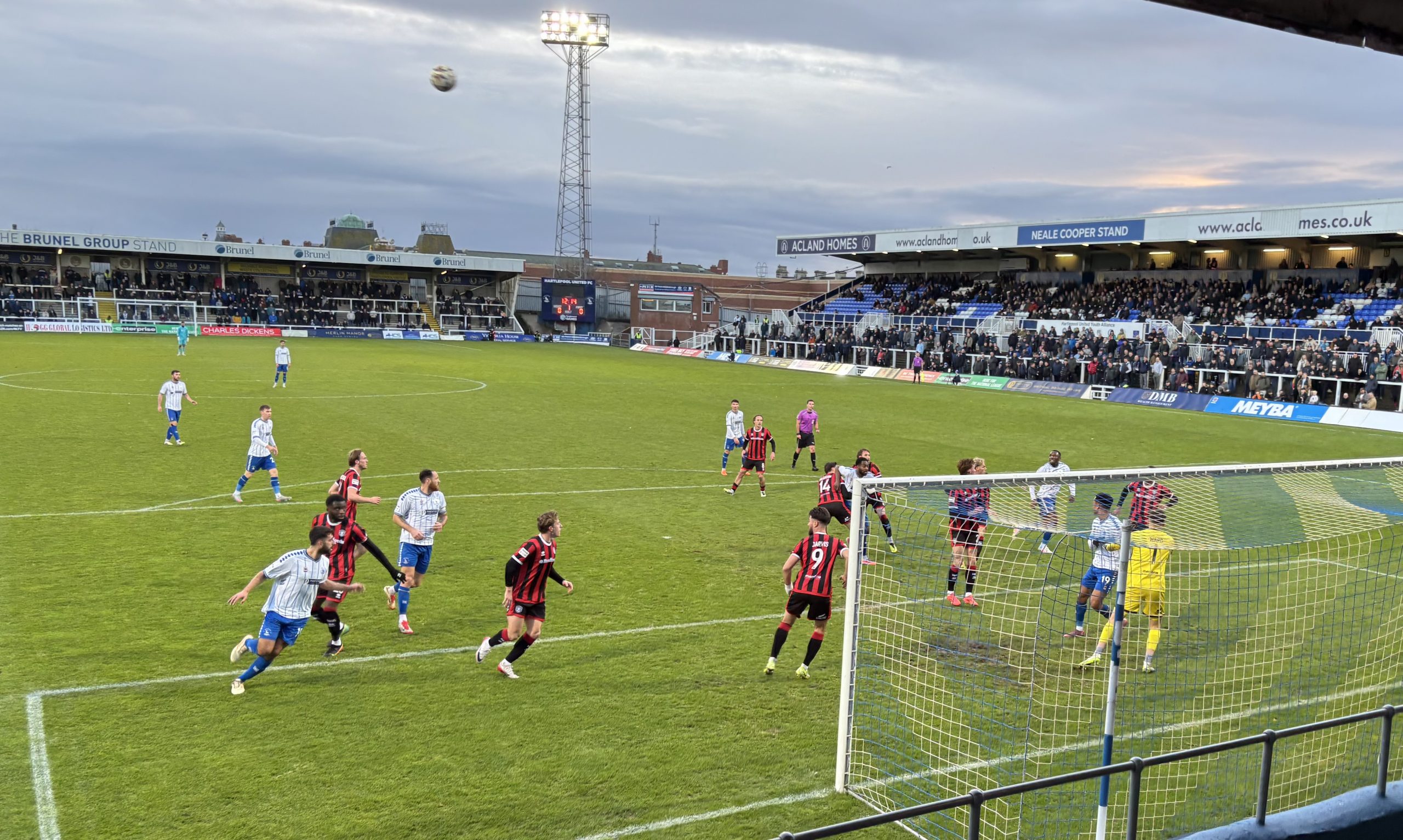
Hartlepool v Yeovil ; why it’s good to be a Glover!

This blog is for the fans who went to Hartlepool from Somerset on a wet early December Saturday

For a club that was heading towards relegation with a manager that didn’t do the job well , we have had a couple of good weeks. A new manager (Billy Rowley), our fourth this season and two wins , Yeovil is looking up not down.

Congratulations to the fans who made it to Hartlepool in bad December weather from Somerset.

London has its premier teams but there is an entitlement to football success that you don’t see at Yeovil. Today Yeovil a beat it drew 0-0 with on the opening day of the season at the Huish. We were outplayed that day and I am so pleased for our players and our fans that we had the day we obviously did.

This blog isn’t used to inflicting Yeovil pain on its readers – that’s not the deal we have.

But occasionally this blog reminds itself that Yeovil Town is just like Arsenal or Tottenham being a team that puts 11 players out to win a set of games!

Here’s the match report

Yeovil Town scored in both halves to wrap up a hard-fought victory at Hartlepool United.

The Glovers took the lead after just 14 minutes when a burst down the left from Luke McCormick picked out Aaron Jarvis in the middle to sweep home the opener.

They had to withstand intense pressure for much of the game, but sealed three points in style when the persistence of McCormick to attack down the left and curled a sumptuous strike in to the net.

There were chaotic scenes at the final whistle with an enormous melee in front of the dug out leading to both Glovers’ defender Morgan Williams and Pools’ substitute Jermaine Francis being sent off after the final whistle.


First half

After an even opening ten minutes, the first meaningful opportunity of the game fell to the home side on 12 minutes as Adam Campbell laid ball off to Matt Daly whose low shot was turned aside by Jed Ward.

But three minutes later, Yeovil took the lead. When we Luke McCormick burst away down left side and squared the ball to Aaron JARVIS who stroked the Glovers in front with 14 minutes. You can’t help but think that a few weeks ago McCormick might have checked back and played a pass back to his defence.

Three minutes later Jarvis, who had been making a nuisance of himself from himself the start, was brought down on the edge of the box by Maxim Kougoun who earned himself the first booking of the game.

From the resulting free-kick, Brett McGavin curled on just wide of the post.

The play which created the goal almost repeated itself on 28 minutes as McCormick got away down the left again and this time forced a good stop out of Hartlepool keeper George Evans.

At the other end a nice move involving Campbell and Daly found Alex Reid inside the six yard but he put his chance wide of the post with the offside flag up anyway. A minute later, McCormick came even closer to doubling the advantage as he beat Evans but not the post.

Hartlepool were starting to see more of the ball as the half wore on and with ten minutes remaining of the first half, Jay Benn was found in space on the right of the box and his driven ball was palmed away from danger by Ward. Daly flashed a good opportunity past the post on 37 minutes and moments later another driven ball from Benn was cut out by Michee Efete.

We are definitely standing firm, but the Hartlepool are turning the screw and there are undoubtedly times when we appear to be inviting pressure on.

The half-time whistle was met by a roar from the away supporters who had been non-stop in their support from the opening whistle. Amazing what attacking football and backs to the wall defending can do for a fanbase!

Half time: Hartlepool United 0 Yeovil Town 1


Second half

The second half started with the home side on top again. First Ward had to be alert to keep out Daly’s chance before a towering header Tom Parkes whistled just past the post.

The pressure was all Hartlepool’s in the opening 15 minutes of the second half, but the next chance fell to Yeovil. On 63 minutes, it was another attack down the left led by James Daly who forced a stop out of Evans.

On 65 minutes, Billy Rowley made his first substitution with Tahvon Campbell replacing Aaron Jarvis with Alex Whittle coming on for Harvey Greenslade after 73 minutes.

Hartlepool, who were unbeaten in the previous seven matches going in to the game, enjoyed much of the play but Yeovil’s hard work held them at bay. Whilst the possession stats for the second half will be heavily weighted to the home side, they showed much to seriously trouble Jed Ward.

It was left to Luke McCORMICK to seal the win. He showed amazing persistence to not give up on a ball in the fourth minute of injury time before curling a shot around the keeper and in to the bottom corner to send the away end in to delirium.

As the final whistle sounded, a huge melee involving what seemed like every player and member of staff from both sides exploded in front of the dug outs. From the distance of the away end it was difficult to tell exactly what happened, but the result was sending’s off for both Yeovil’s Morgan Williams and Hartlepool’s Jermaine Francis.

There were reports of a Hartlepool fan getting on to the pitch and swinging a punch at Yeovil’s Finn Cousin-Dawson which, if even vaguely true, requires serious answers from Hartlepool,

Full time: Hartlepool United 0 Yeovil Town 2


Match Details

Venue: Victoria Park
Date: Saturday 6th December, 3pm kick-off

Competition: National League Premier Division

Scorers: Aaron Jarvis 14 (1-0), Luke McCormick 90+4 (2-0)

Pitch: Didn’t look too bad

Conditions: Cold, wet. It’s December in Hartlepool.

Attendance: 3,014 (98 away supporters)

Bookings:

Yeovil Town: Aaron Jarvis 37, Jake Wannell 58, Kyle Ferguson 66, Luke McCormick 86.

Hartlepool United: Maxim Kougoun 17

Sendings off

Hartlepool United: Jermaine Francis 90+8

Yeovil Town: Morgan Williams 90+8

Referee: Dean Watson

Posted in pensions | Leave a comment

Pension Schemes Bill is OK and moves to House of Lords

This article is largely taken from Pension Age; thanks to Sophie Smith, one of our brightest reporters and Deputy Editor of Pension Age. It reports the positions of the biggest parties by seats (though not popularity). I would like it if she would speak to UK reform and the Green Party to get their positions on the Pension Schemes Bill.

My summary is that the Commons is happy with the general thrust, but that it will have a harder time in the Lords.

The Pension Schemes Bill passed its report stage and third reading in the House of Commons this week and will now move to the House of Lords for consideration of the amendments made by the Commons.

If the Lords agree to the amendments and the wording of the Bill, it can receive Royal Assent and become law.

However, if the House of Lords disagrees with any Commons amendments, or makes alternative proposals, it will be sent back to the Commons and could potentially ‘ping-pong’ between the Houses until an agreement is reached.

The government had previously expressed hope that the Bill would receive Royal Assent in early 2026, after which it would begin consulting on regulations to be made under its new powers.

However, work on supporting legislation is already underway, with the government currently consulting on two draft statutory instruments designed to deliver several key Local Government Pension Scheme (LGPS) changes included in the Bill.

The date for the Bill’s first reading in the House of Lords has not yet been confirmed.

Commenting during the third reading, Pensions Minister, Torsten Bell, stated:

“Pensions matter. They are the means by which we deliver on some of the biggest promises we have made to the public: that the prospect of a comfortable retirement, with the option of leisure in later life, is there for the many, not just the few.

“We need not only to encourage people to save, but to ensure that those savings work as hard as possible for them to deliver that comfortable retirement. That is ultimately what this occasionally technical Bill is all about. Better returns mean better retirements, and there are few things more important than that.”

Torsten Bell

Bell argued that the bill

“adds wind to the sails of some of the major changes already underway in our pension landscape “, including the push towards larger, better-governed schemes, better able to access and deliver returns for savers and to invest in a wider range of assets.

“Those are real improvements shaped by constructive debate and detailed scrutiny in this place and across the pension industry”

The passage of the Bill has not been without obstacles, and several proposed amendments to the Bill were voted down during the third reading, including an amendment intended to prevent the use of the reserved mandation powers until the government produces a report on the reasons why the powers are needed, as well as a separate clause that would remove the power altogether.

MPs also rejected a clause intended to make it easier for a person to demonstrate that they are terminally ill for compensation from the Pension Protection Fund (PPF) or Financial Assistance Scheme (FAS), as well as a new clause that would have required the government to establish investment funds aimed at areas such as high streets, social housing, care homes, clean renewable energy and other socially beneficial investments.

Despite concerns in some areas, broad cross-party support for the Bill’s overall policy intent remained evident throughout its passage through the House of Commons.

Helen Whately

Conservative MP for Faversham and Mid Kent, Helen Whately, clarified that while

“we on the Conservative Benches do not agree with all of the Bill, but there is a lot in it that we do welcome, particularly the parts that the Minister inherited from us, including the consolidation of fragmented pension pots, the introduction of the value for money framework and the pensions dashboard”.

“Those will help people to manage their pension savings and get better returns,” she stated. “We also welcome the government’s amendment of the Bill, reflecting our new clause, to index pre-1997 pensions, for which there was significant consensus across the House.”

However, she argued that the Bill still has some “serious flaws“, raising particular concerns over the fact that the reserve mandation power remains.

“Nestled within the sensible reforms that the government inherited is a power that no government should wield: the power to mandate how pension funds invest,”

she stated.

“We should not for a minute underestimate the significance of that. Ministers have insisted it is merely a backstop and a tool they hope never to use, but a threat made just in case is still a threat, and pension trustees know it.”

She also urged the Minister to consider the worst thing that someone else might do in their position—in essence,

“I am not a bad man, but what might a bad man do?”

“He might be confident that he would not abuse the power, but what if someone else had it?” she queried.

“Trustees are the custodians of people’s life savings. They are not there to carry out manifesto pledges or pet projects, and the Minister should not put himself or any future Pensions Minister in a position to tell them to do so.”

In addition to mandation concerns, Whately also raised issues around the question of pension adequacy, arguing that the Bill

“falls short when it comes to tackling the serious problem of people under-saving for later life”.

However, Whately confirmed that Conservatives would not vote against the Bill, instead urging ministers to

“listen to the wise and expert words that will be spoken when it is debated in the other place, and to use that opportunity to fix it”.

Steve Darling

Liberal Democrat MP Steve Darling echoed this sentiment, noting that while

“there is much to be welcomed in the Bill… as a constructive opposition and a critical friend, I will spend most of my time reflecting on where there could be improvement”.

In particular, Darling stressed the need to introduce a mid-life MOT on investment opportunities, including five years before retirement.

“We think that that could be strengthened significantly,” he argued, emphasising that pension understanding and knowledge still remain low.

Other MPs suggested that outstanding issues, most notably adequacy, may need to be addressed through future legislation.

SNP MP for Aberdeen North, Kirsty Blackman, said:

“We rarely see pension Bills presented, and I would love to see another—shortly, probably.

“Given that the Minister has made commitments in relation to fiduciary duty, and given that he said he expected such a measure to appear in primary legislation with guidance to follow, I assume that a Bill will follow those commitments. I also think that the adequacy review may—hopefully—kick up some requirements for legislation.

“This House should get used to talking about pensions. As the generations shift, the state pension will become a smaller percentage of what people rely on in retirement, and auto-enrolment and defined contribution schemes mean that significantly more people will rely on private pensions.”


Thanks Sophie Smith – this is the kind of journalism which we need!

Posted in pensions | Tagged , , , , , | Leave a comment

Purple book and PPF letter sheds light on Pre-97 increases (to actuary Colin Haines)

The purple book is out and this is actuary Colin Haines analysis of salient numbers! This blog is for people as the actuarially inclined Colin, William McGrath and Con Keating. I simply share the information that has reached the inbox!

You can download the book from this link.

Colin finds an interesting chart I paste below taken this new PPF Purple Book; first the comments in the FT that allocations to UK equity are now down to 0.7% of assets

  • More than 75% of schemes provide pre-97 indexation, with a fixed 3% a year or RPI capped at 5% being most common.
  • The PPF states that this excludes discretionary increases
  • Pension schemes that don’t provide indexation are in a minority (unless they still provide discretionary increases – this data is not captured)
  • This is consistent with the PPF modelling figures below, showing providing pre-97 indexation will impact around 75% of the PPF’s liabilities / schemes

Colin adds a note;

On the equity point (see 2nd chart below), even though 5% of equities are in UK quoted; another 45% are in unquoted/private  with the remaining 50% in developed & emerging markets- the % in unquoted/private does seem high so I wonder if it includes some funds (eg DGFs, hedge funds, investment trusts) that are indeed invested in UK equities.  So we may need to be careful of the headline figures.


He continues

FYI The PPF did modelling on various benefit improvements for the Work & Pensions Select Committee in August 2025.  Given its timing, there does not appear to have been too much said in the industry on this at the time (certainly relative to what has been said on salary sacrifice in the last month)

Colin finds a letter

The letter is downloadable here, in their Resource Library: 

Or you can read it from the page

From which he extracts these points of interest:

  • Prospective increases for existing members adds £1.2bn to liabilities – an overall increase of 7% (or an increase of 9-10% if we only consider schemes that had such increases)
  • Applying increases retrospectively, as well as prospectively, on existing PPF members would have cost £3.9bn – perhaps considered too much (including politically) despite being less than 30% of the PPF surplus
  • Applying this to all schemes (ie schemes where pre-97 increases was only discretionary) would have added an extra £0.4bn of costs
  • This now makes the PPF 10% more generous for schemes with such increases – so making buy-in to buy-out decisions for such schemes even more complex
    • And what if the PPF/Government in the future decided to apply surpluses to fund retrospective increases

And Colin provides additional information:

  • Increase in liabilities from a CPI (2.5%) cap on Pre-97, for schemes that provided such indexation, was £1.2bn
    • See Table 1b, line 1
    • Baseline liabilities for the modelling were £18.1bn (with assets of £32.2bn and surplus “reserve” of £14bn)
    • This is a 7% increase in liabilities; and a 11% drop in funding level (to 163%)
  • The PPF also calculated that giving pre-97 indexation to all members (including those in schemes without such indexation) would have been £1.6bn (See Table 1a, line 2).
    • So, by deduction,
      • Cost of providing indexation to those that had it in rules: £1.2bn
      • Cost of providing indexation to everyone else: £0.4bn
    • So we can summise and say approximately 75% of schemes had pre-97 increases, c £14bn liabilities
      • Those that had such increases see the value PPF liabilities increasing by 9-10%
      • Those without see a 0% increase in liabilities
    • This improves PPF benefits by around 10% for those schemes that had such increases
  • However if applied retrospectively, current pensions would now be higher and so would the cost of providing them prospectively
    • The total cost for retrospective and prospective increases is £5.2bn for all (including arrears):  see Table 1a, line 8
      • £3.9bn for those where indexation was in rules (Table 1b, line 5)
      • £1.3bn for those where it was not (by deduction)
      • £5.2bn improvement would increased liabilities by 29%, and funding level by 40% (to 138%)

William McGrath had prompted the discussion with this nugget;

Shalin Bhagwan (PPF actuary) refers to page 82 of Budget costings.

McGrath’s comment

Not totally clear. Seems pre 97 is in for new PPF entrants . That does change the risk benefit count for TAS 300 exercises. Run on with higher UK asset allocation and The Bell does chime for an economic stimulus.

I find it hard to make head or tail of all this information but I hope that putting this information out in public will give the likes of Terry Monk a chance to get some if not all the money due before he grows too old to enjoy it.


Thanks to David Robbins for this in “extra-time”.

In case you want to see that whole quote

Posted in pensions | Tagged , , , , , , | Leave a comment