


How google pictures St Andrews day today – so easy!
I spent some time last week expressing my dis-satisfaction with the DC Governance and the irrelevance of most DC trustees. It is easy to throw stones….
What is also needed is someone to mend the greenhouse to make it fit to nurture..
We need to find a way of talking about our pension plans which makes sense to the people who use them and depend on them to convert pension saving into pension spending.
I often hear people say that if we could only get rid of the word “pension”, it would be problem solved. It wouldn’t, the problem is not with the word but with “confidence”, if people were confident they were in a good pension , then the’d be proud of the word.
I’ve been looking for an extended metaphor (a conceit) for inspiration. I’ve landed upon the motor vehicle as my metaphor.
There are three essential properties of a car that need to be right; chassis,engine and steering.
Chassis
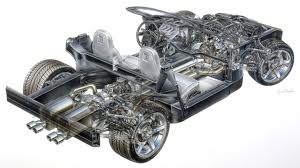
Without a sound chassis and associated bodywork, a car can take you nowhere. The chassis has to be of sound construction and durable. The pension equivalence of a chassis can best be described as the service superstructure.
Engine
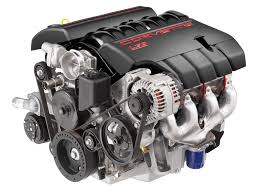
The engine of a car is what drives performance, an engine should have good fuel economy and should meet the needs of those who drive the car. There can be many different types of engine. The pension equivalent is the investment mechanism.
Steering
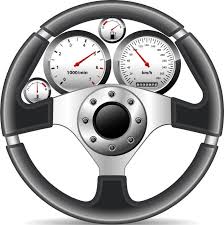
The consul of the car that comprises the wheel,gears, pedals and dashboard enables the driver and any passengers to control the vehicle and enable its progress to the destination. The pension equivalent is the member interface between provider and member.
Whether the vehicle in question is a single seater or a charabanc with many passengers, this conceit holds true.
Rather than think of a pension as having 31 governable characteristics, we should think of it as a vehicle that gets people from A to B in a variety of different ways.
We think we can measure the suitability of a vehicle in six different ways
- Its cost– is this vehicle vehicle “value for money” in terms of initial costs and ongoing servicing.
- Its performance – does it perform as expected (whether a Lamborghini or a mini)
- Its steering – does it give necessary control to the driver and/or passengers.
- Its chassis – is it of sound construction so that it securely carries driver and passenger
- Its adaptability – once it reaches its destination , can it be used for the return journey
- Its durability – will it stay the course and will it offer lifetime servicing.
Maybe I am over-stretching the metaphor , but I hope you get where I am going. The tangibility of a motor and our familiarity with them make it easy to relate to “what makes for good”.
Why we need fiduciaries – trustees advisers, IGCs

Most of us, cannot be so familiar with pensions; a pension’s value for money depends not just on what you can see – historic performance and quoted costs, but on a detailed understanding of fuel consumption (charges) and the capacity of the pension to continue to deliver.
Because this is hard, we need experts- fiduciaries, to assess and monitor value for money, ensure that administration is being properly carried out, check the calibration of the dashboard, check the brakes and accelerator, the steering and the mirrors that allow us to manage our pensions. Whether these experts are trustees or are members of IGCs or are our financial advisers, they have to do the same job, make sure we get from A to B without fuss.
These people who look after our pensions are our buyers, our service engineers, they do the MOT and make sure the car is safe. If they are not doing their job- it matters.
Which is why I think the job of being a DC fiduciary is too important to be left to people who don’t understand these things.
I do not see the standard of fiduciary care generally available to members of occupational DC schemes as very high at all. If we were to think of trustees as mechanics, I would not let most of them loose on my car, let alone put them in charge of a MOT centre.
There are over 40,000 occupational DC schemes in this country but there are not 40,000 occupational DC trustees up to doing the job.
We have been failed by these trustees in the past. The appallingly low numbers of retirees from DC trusts exercising the Open Market Option, the ridiculous charges levied on some investment funds, the creaking administration, the lack of member engagement and education and the failure to empower members to take decisions for themselves is endemic in occupational DC schemes.
It is no longer good enough for DC trustees to point to insurance company GPPs as “worse”, they’re not. By and large they are better. They had better OMO take up, provide better interfaces with members, are better administered and have investment funds that are much better governed.
I generalise I know, there are well governed occupational DC plans, but not many. And those few that are well run, cannot speak for the many that are not.
It is time that we got DC trustees to do their job- or shape out. We cannot go on tolerating failure in a part of the market that matters so much.
