


Of course Ian Brown is right and Mary McDougall has done well to get this published by the FT. The feeble bleating of other journalists and of those still living in a paradigm of “de-risking” have not got the message. Bell allowed articles like this to be published.
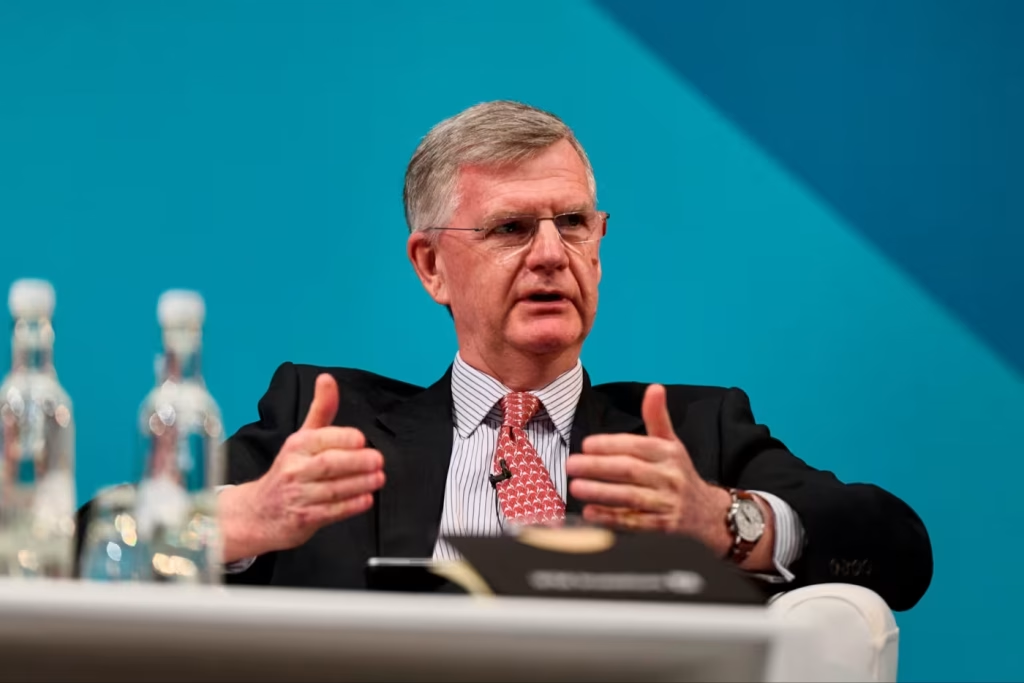
Brown was pacing the halls in Edinburgh making it clear that it’s growth that counts and here he is talking to McDougall.
“Pension funds are prepared to invest in very large so-called transition funds. but often they are investing in operational wind or solar projects . . . What we need to do is actually build this stuff,”
“People aren’t taking anywhere near enough risk . . . we need something like £30bn, £40bn or £50bn per year to be spent on the various technologies that we are trying to grow,”
Brown said. But funds
“want to take less risk and go with the safer assets which are the ones already producing cash flow”.
So Ian Brown knows, there were a number of people in those halls who were listening and nodding and I was one of them.

I’ll declare an interest in this. I work with an organisation looking to import thermal energy into the UK. Those good souls will read this article with satisfaction.
Ministers’ proposals to ease planning backlogs and shake up how clean power projects link up to the National Grid would be “vital” to attracting more investment in infrastructure schemes, Brown said, because of the number of projects that hit severe delays or were cancelled. Brown said there was a “huge range” of areas in need of money, including floating offshore wind, battery storage and carbon storage.
Of course it is assumed that Defined Benefit schemes are the target for such investments. I see defined contributions just becoming defined benefit pension schemes funded by employers and their staff at a consistent level. The duration of investment for a collective DC plan paying pensions is the same as a DB plan – it is as long as there are people alive and claiming pensions- that should be considered infinite. Infinite is the need for clean energy, endless the need for investment in growth in the infrastructure that enables our economy to grow.
The FT concludes by framing NWF’s demand in the Government’s plan.
His comments come after pensions minister Torsten Bell last week called on fund managers to re-evaluate Britain’s £2.4tn retirement savings industry, both in terms of maximising returns and ensuring the country is investing and growing after a decade of lacklustre economic growth.
We can no longer consider “risk” something pension schemes should avoid investing in. I look forward to reports from the old and new style of pension schemes which focus on the success of their investments and the capturing of risk, converting it to growth and so to bigger pensions.
I will add one plea, can we please rid the Regulator and Trustees who work with TPR of Section 58. The restrictions on trustees of old style DB plans do not allow trustees to invest in funds offering the opportunities to achieve real growth and enable clean energy (inter alia). My good friend John Hamilton is doing the right job, intervening in my meetings with Regulators, the DWP and the Treasury, demanding Government do their part.