Isn’t this idea of a ‘house pension’ what DC default funds were meant to provide – albeit for accumulation phase initially – but to then lead people to an annuity. However, even for accumulation, they are not working well for customers.
‘Experts’ have designed these default funds with the idea that they will be suitable for the ‘average’ person, but well-meaning ‘target date’ or ‘lifestyle’ options have failed to keep up with changes in pension rules and people’s lifestyles.
The possibility of flexibility and reality of individual needs are ignored. No provider explains properly what these ‘default’ funds (what a dreadful name!) are doing with their money, nor do they check whether the ‘target date’ is the correct date and whether people’s lifestyle is going to mean retirement at any particular date, nor whether they may not even want to touch this money for many years to come.
Their fund is just moved year by year out of potentially higher return assets, which they may even have to buy back at higher prices when they enter drawdown in coming years.
This idea that ‘experts’ know better what people want than the people themselves, without even asking them vital questions about their health, work plans, other pensions etc, seems to me to be flawed in 21st century Britain. Without knowing those vital elements, an approach that suits the ‘average’ is not safe or suitable to rely on in my view.
There seems to me a need for some intelligence here. In the absence of human resource necessary to deal with the estimated 650,000 people who turn each year from net savers to net spenders of their retirement savings, it will have to be an intelligence of another kind. We all know the alternative to natural intelligence.
Ros’ comment slightly misses my point as I was talking about what happens to your savings once you start spending them. Many people are choosing to drawdown, many more to cash out and some are swapping pots for pensions using annuities. A few are using their pension pots to provide their family with protection against death taxes.
It seems to me that the point to use artificial intelligence is not at the point at which you draw your money but some years behind. This looks like a job for the mid-life MOT. This however assumes that people are any more ready to undergo an MOT in their forties than to go to Pension Wise in their fifties and sixties. Capita are currently running a trial for the DWP in Devon and Cornwall. Will it result in “awareness” or will people do something about their pre-retirement investments as Ros would have them?
In my view , running a mid-life MOT whether using human resource or a sophisticated algorithm needs to be accompanied by a number of pre-retirement pathway funds that meet the differing needs of people. That sounds easy enough until you think of just how little fund switching there has been over the years and who has done it. The vast majority of fund switching has been through “transfers out” of workplace pensions to SIPPs (where the sophisticate and/or their advisers operate to and through strategies (SJP alone has some 370,000 wealthy people whose drawdowns they manage.
The problem for the mid-life MOT is the problem for Pension Wise, it is the smart and sophisticated people who flock to it, while the less smart or sophisticated trust that things will be done for them – to see them right. Most people do not want financial empowerment when it comes to pensions, they want to know the rules and to follow them. See how Martin Lewis offers guidance on topping up state pension entitlements to see how this can be done.
That Martin Leis obdurately stays out of offering advice or guidance on investment decisions (including investment pathways) tells you what you need to know about mass market decision making.
Advice or product – 0r should we start with a common purpose for pensions?
The financial services industry has so far contended that we have a deficiency of advice rather than of product. To use my “house pension/wine” analogy, if we could explain the menu to each customer, everyone would have the wine they wanted at the price they could pay.
I don’t think it’s like that. I think most people want a recommendation and most people skip the clarets and burgundies for the house wine.
Although we like to think that everybody has different tastes, that’s because we hang out with sophisticated people who talk fine wine and invest with confidence.
What is missing is a simple product that people can easily purchase and comes with a recommendation . A house pension. To work out what that should be, we need to work out what brings us together , not what sets us apart.
Where I join arms with Ros is in recognising that the default fund has to match the house pension , as the wine matches the meal. If we are to continue to invest in later life, we need a default that marries with the invested pension. If we are recommending annuities, we need a default that matches.
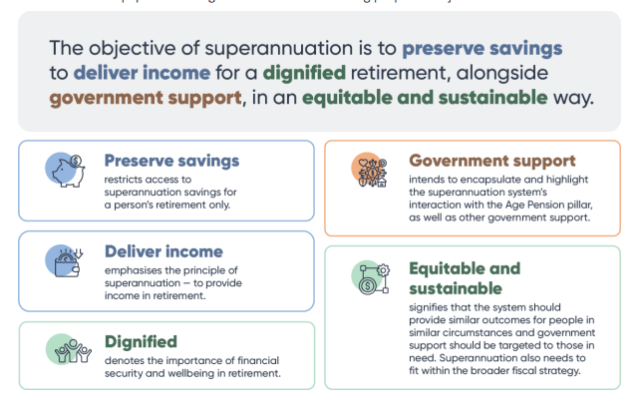
Right now , we have no consensus on what our workplace pensions should be doing as the Australians are beginning to have. When we get that consensus, we can move forward.
We need a common purpose for pensions. Then we can build recommended “house” funds around it.